Market Overview
EUR/USD is entering a critical phase in its recovery. The pair rebounded from the 1.1100–1.1140 region as the US dollar weakened at the beginning of November, with declining oil prices easing some inflation concerns and improving appetite for risk assets. However, the latest move should be interpreted as a corrective recovery within a broader bearish structure, rather than conclusive evidence of a new bullish trend.
The monetary-policy outlook presents a more complicated picture. The European Central Bank maintained its interest rates at its October meeting, but ECB policymaker Peter Kazimir subsequently warned that further increases might be necessary to prevent inflation from becoming entrenched. Markets are reportedly anticipating two to three rate increases over the coming year. This potentially supports the euro through higher expected yields, although weaker economic growth and fiscal concerns in France remain significant obstacles.
On the US side, resilient manufacturing activity and persistent input-price pressures continue to support the argument that the Federal Reserve may maintain restrictive monetary conditions. The US ISM manufacturing PMI reached 55.5 in October, indicating expansion in manufacturing activity. Upcoming labour-market data, particularly Friday's Nonfarm Payrolls report, could substantially change expectations for US interest rates and trigger sharp movements in EUR/USD.
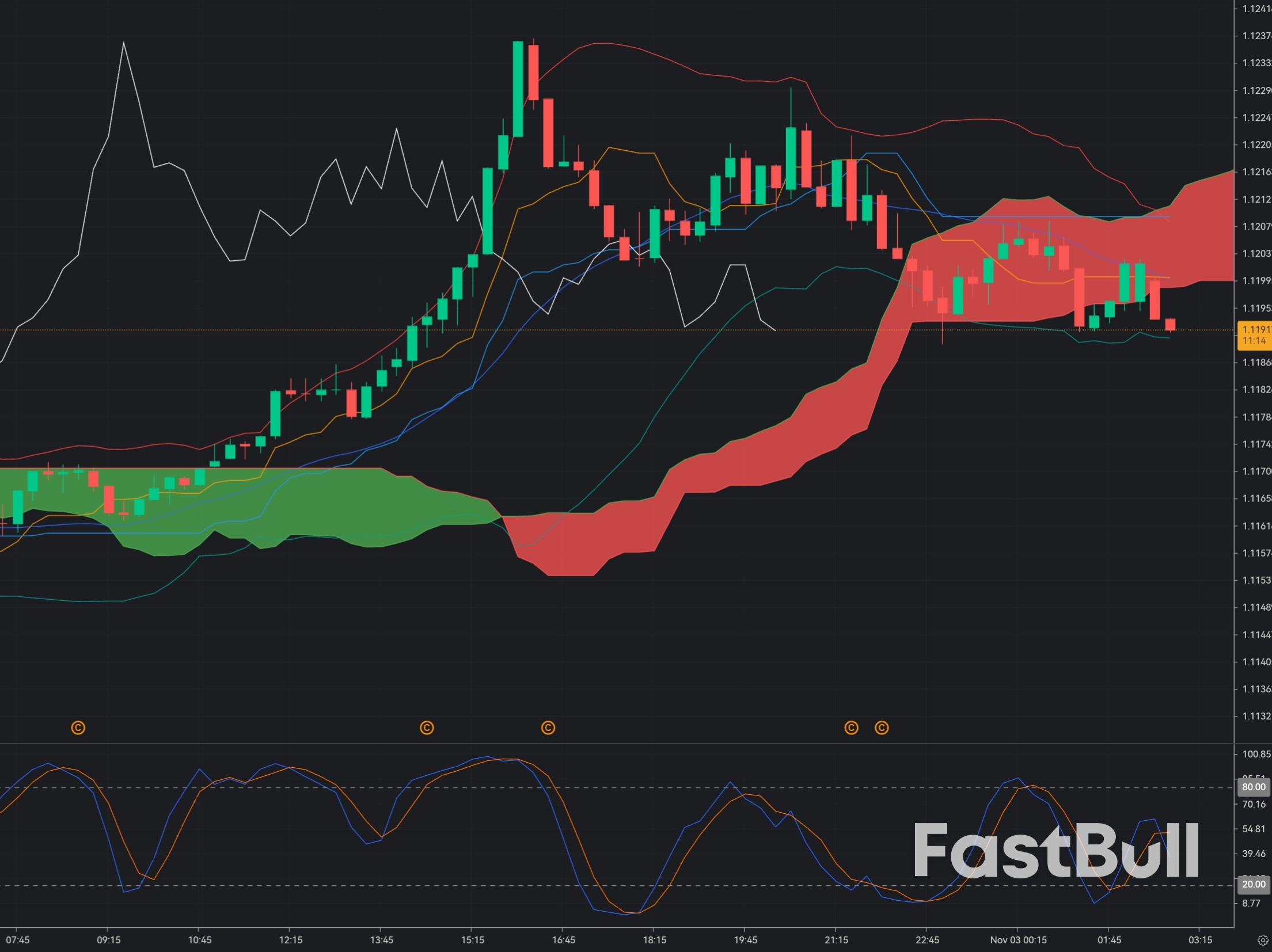
For the proposed BUY at 1.1190, the key consideration is whether the euro can maintain its recovery despite the dollar's potential fundamental support. A sustained move above 1.1210 would improve the immediate bullish outlook, while failure to hold 1.1170 would weaken the recovery and expose the pair to another test of 1.1145.
Market Sentiment
Current sentiment reflects a conflict between improving short-term momentum and a still-bearish medium-term trend. The recent dollar pullback has created opportunities for EUR/USD buyers, but investors remain sensitive to US economic releases and political uncertainty surrounding the US midterm elections. These events may increase volatility and produce temporary price spikes that do not necessarily represent sustainable breakouts.
The euro also faces its own structural challenges. Fiscal concerns in France continue to weigh on confidence, while weaker eurozone growth could limit the currency's ability to appreciate even if the ECB maintains a relatively hawkish stance. Consequently, the current rebound needs confirmation from price action rather than relying solely on expectations of future European rate increases.
For M15 traders, the most constructive development would be consolidation above 1.1170 followed by a decisive break through 1.1200–1.1210. Such price behaviour would suggest that buyers are absorbing selling pressure near resistance. Conversely, repeated rejection around 1.1200, accompanied by lower highs, would indicate that sellers remain active and could force another decline.
The BUY setup is therefore conditionally bullish. The entry at 1.1190 is reasonable only if the pair demonstrates that short-term demand remains strong enough to challenge nearby resistance.
Bollinger Bands (20,0,2): The preferred setup is for EUR/USD to remain above the middle band or recover above it following a pullback toward 1.1190. A subsequent move toward the upper band would support a continuation trade. However, if the bands expand downward and price repeatedly closes beneath the middle band, the rebound is losing strength and the BUY thesis becomes less convincing.
Ichimoku Kinko Hyo (9,26,52): A bullish Tenkan-sen crossover above the Kijun-sen would strengthen the entry, especially if price advances toward or above the cloud. If price remains beneath the cloud, the broader structure is still bearish, meaning any upside move should be treated as a countertrend recovery. A failure to hold the Kijun-sen could signal that sellers are regaining control.
Stochastic (5,3,3): A bullish crossover from below 20 would support the possibility of renewed buying interest after a pullback. If Stochastic rises while price holds above 1.1170, the combined signal would favour a move toward 1.1210–1.1230. Conversely, a bearish crossover from above 80 near resistance could indicate exhaustion. These are confirmation conditions; the live M15 indicator readings have not been independently verified.
Overall, the technical strategy is to buy a confirmed continuation of the recovery rather than chase a temporary price spike. A sustained break above 1.1210 would strengthen the case for 1.1230, whereas a decisive move below 1.1170 would weaken the immediate bullish outlook. The broader downtrend remains a reason to manage risk carefully.
Trade Recommendation
Entry: 1.11900
Take Profit: 1.12300
Stop Loss: 1.11600